
The Intermediate Database Just Broke, This Changes Everything
Selling Into Strength, Why Tonight's Rally Is a Gift...

KR Opinion
Free Edition…
Over the past several weeks, I have been warning about a potential regime change in the intermediate database, which had been projecting forward into June and July in a positive way. That projection was always conditional, and as the war has continued, now roughly sixteen days in, we have seen a complete blowout of the short-term database that has directly translated into massive selling pressure flowing into the intermediate readings. It is important to understand that this shift does not necessarily indicate a major bear market, but it does put the markets in a zone of significant risk for further decline.
One of my favorite setups has always been what happens overnight when the futures rally into the morning. As of now, the market is up a little over half a percent in the premarket, and at the same time, there are a significant number of sell signals firing across the system. That means we will be selling into a higher opening, which has always been advantageous for positioning. Even if we see a couple of weeks of relative rebound from here, this opening still represents a far better selling opportunity than if the markets gapped down sharply again on Monday, as they did last week. And although last week produced a substantial rally off the lows, the market faded from Wednesday straight into Friday’s close, setting up very negative patterns and breaking many of the trend structures embedded in the intermediate models. This is exactly why the system generated roughly four thousand five hundred exit signals for Monday’s opening.
If you haven’t read my special report on crude oil yet, I highly recommend doing so. It’s a bit lengthy, but it covers extensive details, and I will likely follow up in the coming days with additional insights from the research and writing process. As I mentioned in the report, this story is about much more than crude oil and gasoline. One surprising discovery during the research was helium, which deserves serious attention. Qatar has shut down gas production at its major terminals, a move that is important not only for LNG supply to Asia and Europe but also for an entirely different and underappreciated reason. In 2025, Qatar produced about sixty-three million cubic meters of helium out of roughly one hundred and ninety million cubic meters worldwide, representing around one-third of the global supply. This shutdown is removing about five point two million cubic meters of helium from the market each month. Spot helium prices have already doubled, with European spot prices reaching four hundred and fifty dollars per thousand cubic feet. Qatar Energy declared force majeure on all contracts on March 4th, and no restart has been scheduled.
Helium is not a discretionary commodity. It is vital for semiconductor manufacturing, magnetic resonance imaging systems, aerospace applications, and many industrial processes. The doubling of helium prices clearly shows how this disruption has spread well beyond the energy sector into the supply chains that support modern technology and healthcare. Qatar is home to one of only two plants worldwide that produce semiconductor-grade helium. South Korea, which produces about two-thirds of the world’s memory chips, sourced nearly sixty-five percent of its helium imports from Qatar last year. There is no viable substitute for helium in chip manufacturing and no quick workaround. If the outage lasts more than two weeks, industrial gas distributors will need to move cryogenic equipment and revalidate supplier relationships, a process that can take months rather than days. Qatar’s aluminum smelters have also stopped production because the LNG cutoff made power generation impossible. I had no idea how extensively helium is used across the global economy until I looked into this, and if helium supply becomes significantly shorter, it could suggest that the semiconductor industry faces pressures far beyond the stock declines we have already seen. Currently, there is a high level of variability in this market.
One of my biggest concerns is the confirmed strike on Kharg Island. Any lasting damage to Iran’s oil production, processing, or export infrastructure could lead to significantly bigger supply problems later on, and it could also cause Iran to become more aggressive toward its neighbors. There are very serious possibilities here, from damage to desalination plants to widespread infrastructure destruction across the Middle East, and any of that would be utterly devastating. As I mentioned a few newsletters ago, never underestimate a desperate regime. They keep pushing back, and while the administration insists negotiations are close, I don’t believe they’re near a deal. If this conflict lasts beyond five or six weeks, the damage I discussed in the oil report could become much larger than initially expected.
Switching to the economy, we face a Federal Reserve meeting on Wednesday, and there’s a lot of talk that if inflation begins to rise, the Fed might consider raising rates. This is where a fundamental misunderstanding of the current environment becomes risky.
You can’t fix a supply-driven commodity shortage, worsened by shipping disruptions and other issues, simply by raising interest rates and expecting inflation to decrease. The Fed is in a tough spot. They have little to work with. Rate hikes are a demand-side tool being discussed in a supply-side crisis, and that makes no sense. In fact, they might even surprise everyone by lowering rates, because an accommodative stance during a supply shock like this would cause less damage than tightening monetary policy under the false hope it will control commodity-driven inflation. I would be completely shocked if a rate increase was even seriously considered in that room.
We will also see the PPI numbers released, and like the CPI data from last week, all of this is looking back. There is no significant inflation increase that will appear in a backward-looking report from the previous month, because the real impact of current events has not yet been reflected in the data. The Fed meeting will be interesting to observe, but I do not expect them to take any meaningful action, and I certainly do not think they will raise rates or even seriously consider it. As I have mentioned before, the Fed cannot fix this situation through monetary policy because it is a major commodity price shock not caused by demand or typical cyclical forces. It is driven by a physical shortage of supply, and no amount of interest rate adjustments will increase oil production or reopen closed terminals.
Gasoline prices are already above five dollars here in Arizona, and in the Phoenix metro area, they may be pushing even higher. This will start impacting everyone. All costs across the economy will increase if this continues, and as I mentioned in the oil report, this isn’t a situation where prices just fall back to three dollars once they stop rising. Shipping channels won’t reopen overnight, damaged infrastructure won’t repair itself in weeks, and supply chain disruptions will take time to resolve. I worry it could take a year or more to fully recover. I recommend reading the oil report I published, as it explains these dynamics in much more detail, and it would be a better use of your time than me trying to summarize everything here.
Economic Reports for the Week of March 16 - 20
Mar 16 • 08:30 ET: Empire State Manufacturing For: Mar | Trading Impact: Low | KR Forecast: 3.0 | KR Forecast Cons: 0.5 | Prior: 7.1 • 09:15 ET:
Industrial Production For: Feb | Trading Impact: High | KR Forecast: 0.3% | KR Forecast Cons: 0.4% | Prior: 0.7% • 09:15 ET:
Capacity Utilization For: Feb | Trading Impact: High | KR Forecast: 76.3% | KR Forecast Cons: 76.0% | Prior: 76.2%
Mar 17 • 09:00 ET: NAHB Housing Market Index For: Mar | Trading Impact: Low | KR Forecast: 35 | KR Forecast Cons: 35 | Prior: 36 • 10:00 ET:
Pending Home Sales For: Feb | Trading Impact: Low | KR Forecast: -0.7% | KR Forecast Cons: -0.8% | Prior: -0.8%
Mar 18 •
07:00 ET: MBA Mortgage Applications Index For: 03/14 | Trading Impact: Low | KR Forecast: NA | KR Forecast Cons: NA | Prior: 3.2% •
08:30 ET: PPI For: Feb | Trading Impact: High | KR Forecast: 0.3% | KR Forecast Cons: 0.3% | Prior: 0.5% • 08:30 ET: Core PPI For: Feb | Trading Impact: High | KR Forecast: 0.4% | KR Forecast Cons: 0.4% | Prior: 0.8% •
10:00 ET: Factory Orders For: Jan | Trading Impact: Low | KR Forecast: NA | KR Forecast Cons: NA | Prior: -0.7% • 10:30 ET:
EIA Crude Oil Inventories For: 03/14 | Trading Impact: High | KR Forecast: NA | KR Forecast Cons: NA | Prior: +3.82M • 14:00 ET:
FOMC Decision For: Mar | Trading Impact: High | KR Forecast: 3.50-3.75% | KR Forecast Cons: 3.50-3.75% | Prior: 3.50-3.75% •
16:00 ET: Net Long-Term TIC Flows For: Jan | Trading Impact: Low | KR Forecast: NA | KR Forecast Cons: NA | Prior: $28.0B
Mar 19 • 08:30 ET: Initial Claims For: 03/14 | Trading Impact: High | KR Forecast: 210K | KR Forecast Cons: 215K | Prior: 213K
• 08:30 ET: Continuing Claims For: 03/07 | Trading Impact: High | KR Forecast: NA | KR Forecast Cons: NA | Prior: 1850K
08:30 ET: Philadelphia Fed Index For: Mar | Trading Impact: Low | KR Forecast: 10.0 | KR Forecast Cons: 4.7 | Prior: 16.3
10:00 ET: New Home Sales For: Jan | Trading Impact: High | KR Forecast: 720K | KR Forecast Cons: 719K | Prior: 745K
• 10:00 ET: Wholesale Inventories For: Jan | Trading Impact: Low | KR Forecast: 0.2% | KR Forecast Cons: 0.2% | Prior: 0.2%
• 10:30 ET: EIA Natural Gas Inventories For: 03/14 | Trading Impact: Low | KR Forecast: NA | KR Forecast Cons: NA | Prior: -38 bcf
WaveTech Database
The WaveTech database signals a clear deterioration this evening, as the market summary conviction structure drops below the critical 42% threshold at the symbol level now at just 38.89% long across 14,176 names. This sub-40% reading marks a significant drop from recent weeks’ levels, and the decline from sectors (50.00%) through groups (40.20%) to symbols (38.89%) shows that institutional sector allocation is holding up much better than individual stock choices. Only 5,513 symbols have long conviction compared to 8,663 neutral, indicating a broad sell-off at the individual name level even though half the sectors still maintain long positions. The selling pressure reflected here isn’t coming from a single sector it’s widespread and structural.
The weekly models confirm the bearish trend with both readings remaining in negative territory. Weekly 1.2a Long is at 88 with a score of 0.04 negative, while the longer-duration 3.2a Long shows an even weaker 64 with 0.03 negative. The simultaneous negativity across both timeframes with the longer-duration model displaying the softer absolute reading continues to be the main headwind pattern that has persisted since early March, and there is no sign of a change. Until at least one of these models shifts, any long positions at the sector level risk weekly weakness eventually spilling over into daily signals.
The active long book still holds six positions, led by Energy with its standout +25.236 P&L at 115 of 316.727 trading days of expected duration still well within its runway and the portfolio’s strongest performer by a wide margin. Consumer/Non-Cyclical (+14.901, 80 of 260.818 days) and Basic Materials (+9.855, 95 of 146.333 days) round out the healthier positions, though Basic Materials is now approaching the two-thirds mark of its expected duration and warrants closer monitoring. Consumer Cyclical remains the lone underwater position at -1.709 with only 61 of 240.615 days elapsed still early enough that the drawdown is within tolerance, but the negative P&L combined with negative weekly models makes it a name to watch carefully. All six longs carry “Accumulate” designations, which sits somewhat uncomfortably against the deteriorating weekly backdrop.
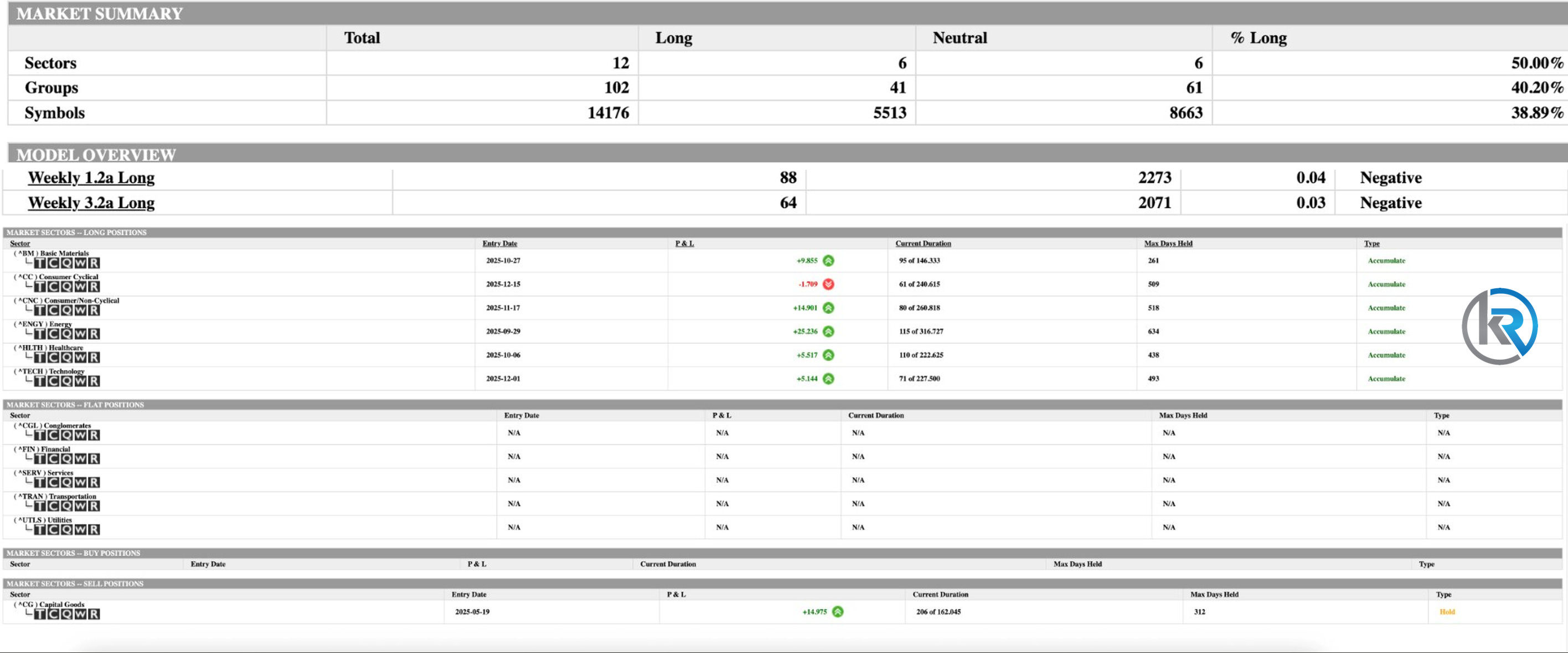
The sell side now shows Capital Goods exiting with a “Held” designation after 206 of 162.045 trading days a position that extended well beyond its expected duration with a +14.975 P&L. This is a textbook example of the duration overextension risk that has been a recurring theme: the position delivered strong returns but ultimately overstayed relative to the model’s expected cycle. Meanwhile, the flat positions in Conglomerates, Financials, Services, Transportation, and Utilities represent dry powder sectors, and given the current liquidation profile, there is no urgency to deploy capital into new entries.
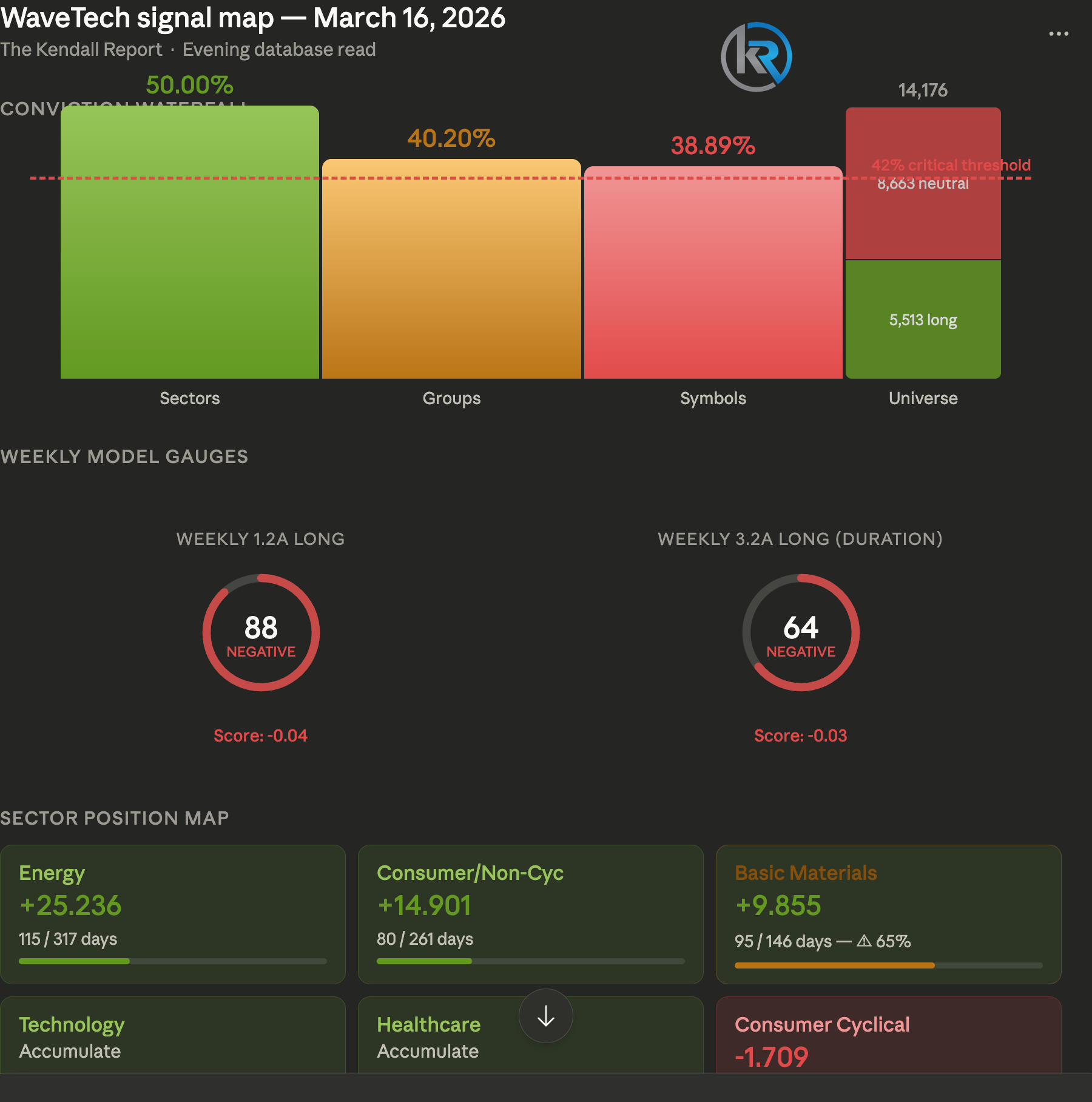
The broader takeaway is that the database is undergoing a liquidity drain at the individual stock level that has now pushed long conviction below 39%, a level that historically suggests further liquidation ahead rather than stabilization. The buy position section sits empty, confirming the system sees no actionable new entries in this environment. With weekly models negative, symbol-level conviction cratering, and the strongest remaining positions still carrying meaningful duration runway, the posture here is clear: protect the Energy and Consumer/Non-Cyclical winners, keep tight duration discipline on Basic Materials as it approaches maturation, and resist the temptation to add exposure until the weekly models show any sign of turning.
S&P 500 Futures
NASDAQ Futures
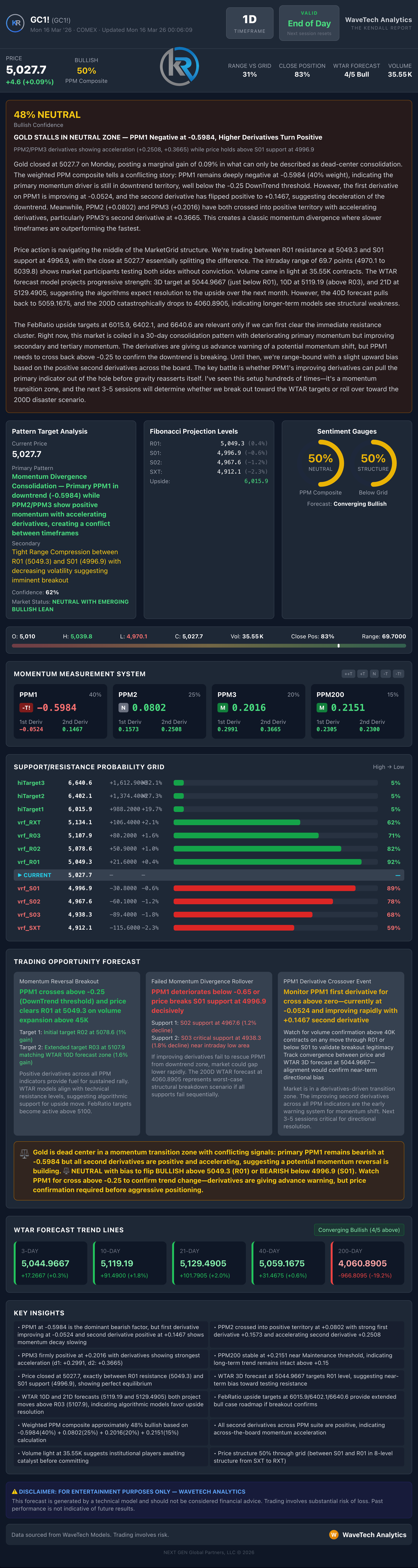
Gold Futures
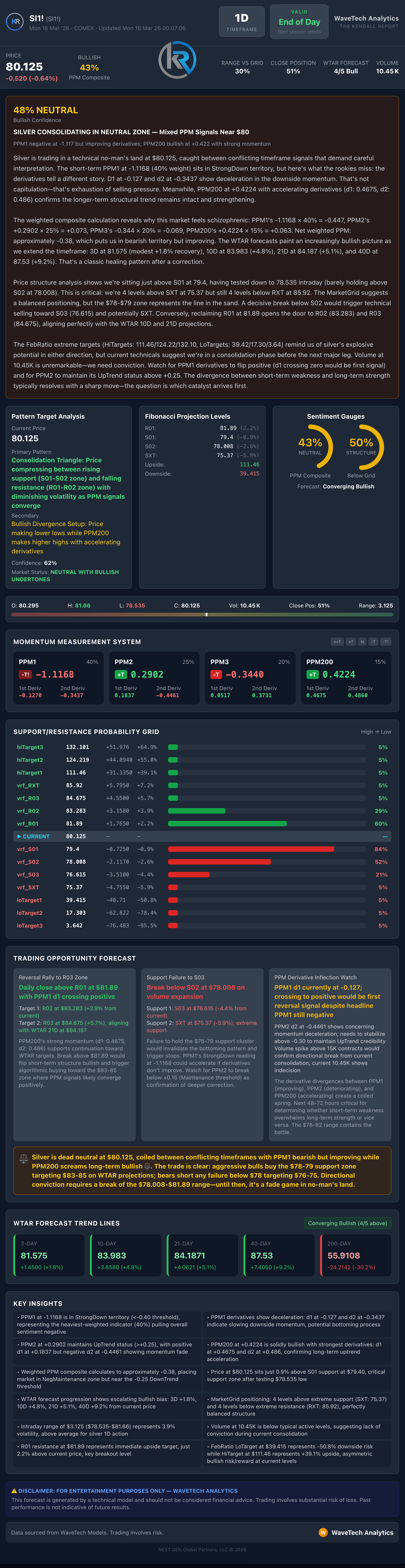
Silver Futures
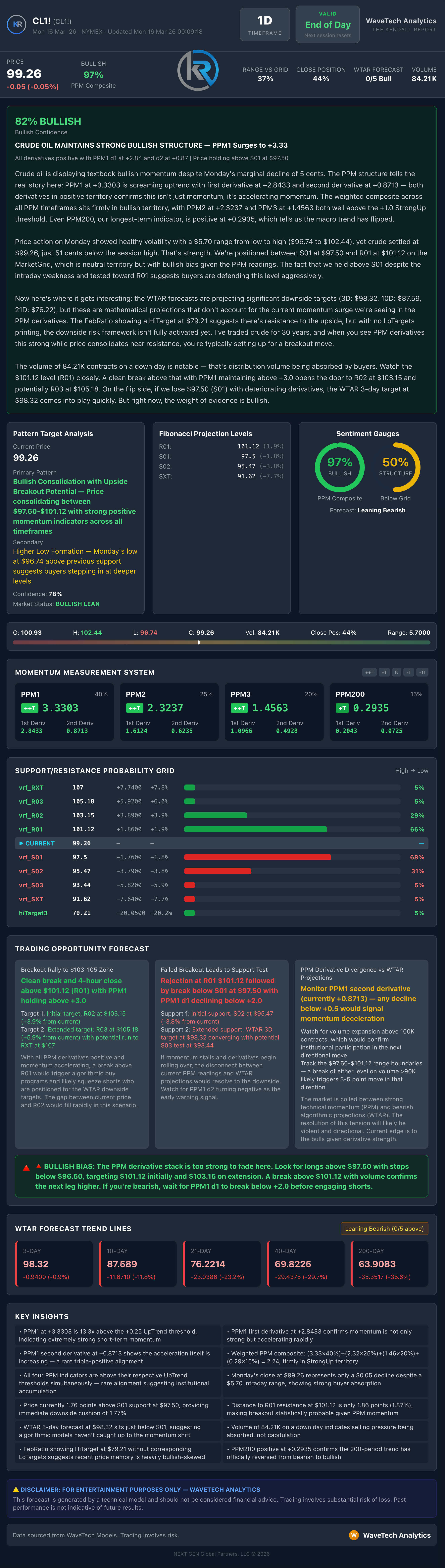
Crude Oil
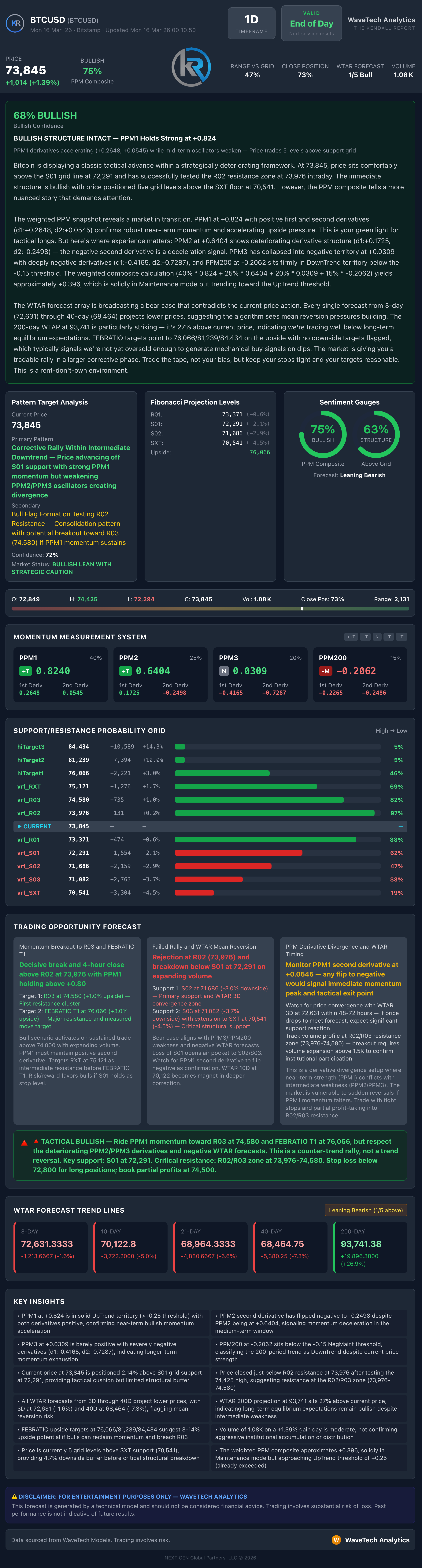
Bitcoin
Robert Kendall
Chief Analyst
“Disclaimer for “The Kendall Report
The information provided in “The Kendall Report” is for general informational and educational purposes only. The opinions, analyses, and forecasts included in this newsletter are based on the author’s personal views and experiences and are provided as is without warranty of any kind.
While we strive to provide accurate and up-to-date information, we do not guarantee the accuracy, completeness, reliability, or timeliness of any information contained in this newsletter. The information presented should not be construed as financial, investment, legal, or other professional advice. It does not constitute a recommendation or endorsement of any particular investment strategy, financial instrument, product, or service.
Investors should consider their financial situation, objectives, and risk tolerance before making investment decisions based on the information provided. The financial market is subject to high risk and volatility. Past performance is not indicative of future results. Investing in the financial market involves the risk of loss, including the loss of principal.
“The Kendall Report” and its contributors will not be liable for any direct, indirect, incidental, consequential, or exemplary damages arising from the use or inability to use the information provided in this newsletter, including but not limited to losses or missed gains.
By accessing and using “The Kendall Report,” you acknowledge and agree to this disclaimer and assume full responsibility for the use of the information provided. We reserve the right to make changes to the content of this newsletter at any time without notice.
This disclaimer is subject to change at our discretion, and it is the reader’s responsibility to review it regularly for any updates.